14 Leasing Agent Safety Tips for Showing Apartments Alone
Safety tips & guidesUpdated 12 min read
The most important leasing agent safety habits are to verify every prospect, tell someone where you will be and keep a clear way out of the unit.
Set these rules before the tour, and end any showing that feels wrong.
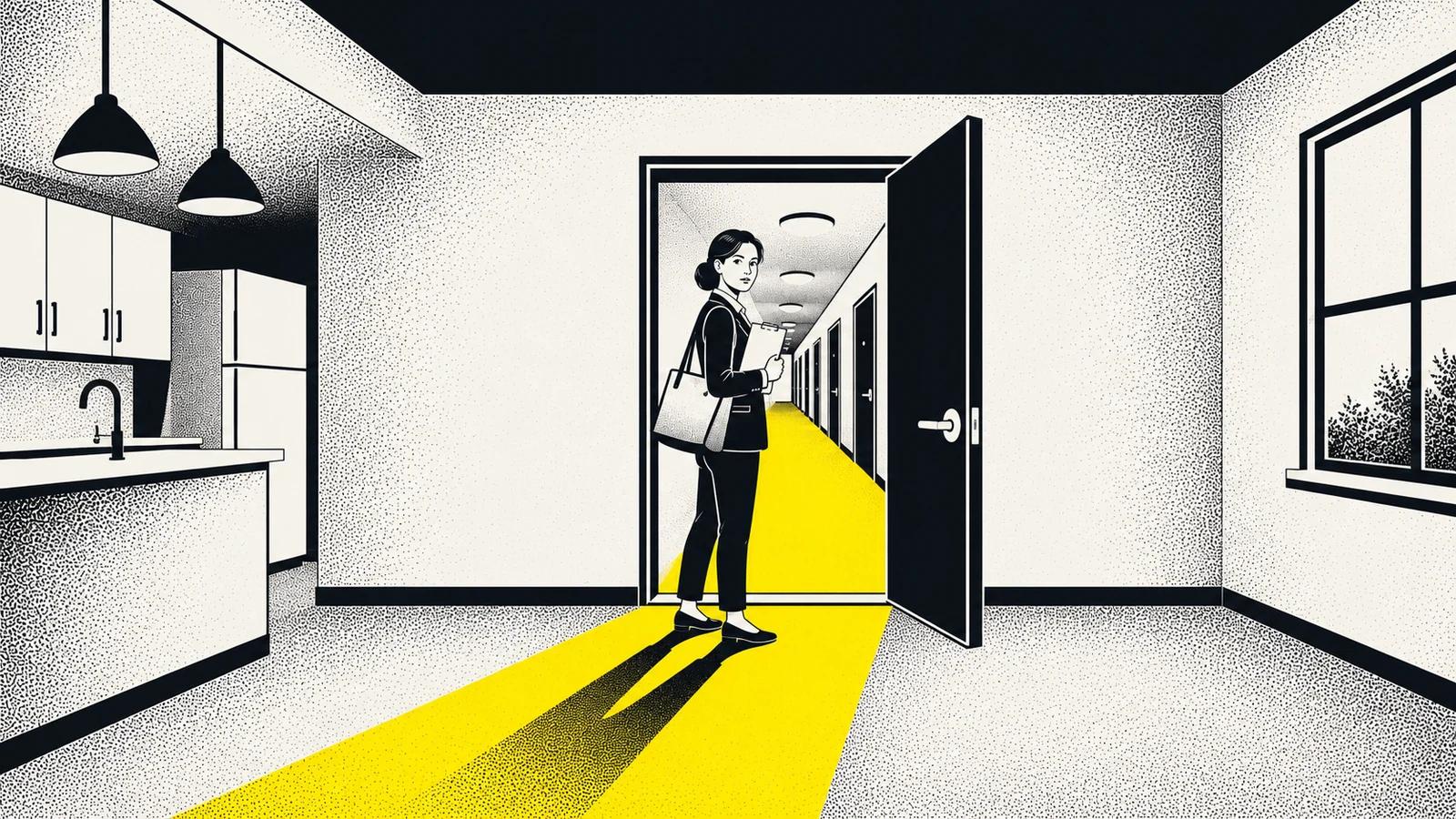
Leasing agent safety matters most when you walk into an empty apartment with someone you have just met. These tips for leasing agents and property managers add to our real estate agent safety tips and run in order, from the booking to the end of the tour. Each ends with red flags to watch for. Judge what someone does, never who they are.
Leasing agent safety tips at a glance
The tips follow a tour from the rules you set beforehand to the moment you end it. Start with the stage where you feel most exposed.
14 leasing agent safety tips
Read across each row to see when a tip applies, what to do, why it matters and what to watch for. Tap a tip to jump to the full explanation.
| Tip | When it matters | What to do | Why it matters | Watch for |
|---|---|---|---|---|
| 1. See the violence prevention plan | Before you tour alone | Ask for the written plan, who can approve a second staff member, when you may refuse a showing and what the policy says on safety items. | Knowing the rules lets you refuse or end a tour without arguing about it on the spot. | No written rule, or pressure to tour alone to keep a lead. |
| 2. Use a showing request card | At booking and arrival | Collect name, phone, vehicle type and plate. Check them and the photo ID, call the number back and apply the same steps to everyone. | It confirms who arrived and how, and a consistent process supports fair housing compliance. | A refused ID, a dead number or a name that differs from the booking. |
| 3. Cut off tours at dusk | When you offer tour times | Offer daylight slots while the office is staffed. Post a fixed cutoff and pair any exception with a coworker. | A set cutoff means you never have to judge a late request while someone waits. | Demands for after-hours or right-now tours. |
| 4. Name a check-in responder | Before every tour | Share prospect details, unit and return time. Write down who responds, how fast, when they call 911 and who covers for them. | Telling someone where you are only helps if they know what to do when you go quiet. | A request to keep the tour private, or a last-minute unit change. |
| 5. Agree two radio codes | Before your shift | Set one ordinary-sounding call for stay close and one for come in now, with the unit number built in. Practice both. | You can bring help to the right door without announcing your concern to the prospect. | Objections when you call the office, or reaching for your radio. |
| 6. Check the unit for entry | Same day, then at the door | Look for forced doors, broken windows and signs of occupancy. Find exits and signal. Back away and call if something is wrong. | An empty apartment may not be empty, and going in to investigate puts you inside with the problem. | A forced lock, an open window or signs someone has been inside. |
| 7. Match the car to the card | Before you leave the office | Compare plate and vehicle, meet in the office or lobby, park where you can't be boxed in and give no rides. | A mismatch is easiest to question while coworkers are still beside you. | A wrong vehicle, waiting by your car or asking to ride along. |
| 8. Test your alarm | Before you rely on it | Keep phone, car key and panic button on your body. Check signal inside the building and send a test alert. | An untested alarm may not reach anyone, and a device never makes a risky tour safe. | Requests to hold your keys or phone, or to set your bag aside. |
| 9. Prop the door, follow them in | As you enter the unit | Hold the door open where building and fire rules allow. Let the prospect lead and keep at least an arm's length. | An open door and your position behind them keep the way out in your control. | Insisting you go first, or closing or locking the door. |
| 10. Wait in the entry | During the tour | Stand near the exit, let them walk the rooms and skip attics, crawl spaces and storage unless a coworker is with you. | You avoid dead ends and keep a clear path out while still answering questions. | Repeated calls into a bathroom, closet or basement. |
| 11. Call the office aloud | At the start and midway | Name the prospect and where you're headed, state when you'll finish and never confirm that you're alone. | The prospect learns that someone else knows who they are and where they will be. | Questions about who else is coming, or a mood change after the call. |
| 12. Redirect personal questions | Whenever talk turns to you | Answer with a property detail. Give only a work number and keep your schedule and home area private. | Friendly questions can reveal when you leave work or whether you close alone. | Questions about where you live or who closes the office. |
| 13. Abort a changed occupied tour | Showing an occupied unit | Confirm notice and who will be home, knock and announce yourself, and leave if what you find differs. | An unexpected person, a loose pet or aggression changes the risk you planned for. | No answer, raised voices or an unexpected person inside. |
| 14. Exit a hostile tour | When someone seems hostile or intoxicated | Say your boss is waiting, walk them out and lock up. Get out at once if in danger, call 911 and report it the same day. | An excuse lets you move without arguing, and a report warns coworkers. | Intoxication, aggression, uninvited companions or attempts to shut you in. |
1. Ask to see your violence prevention plan

Ask for the written plan before you tour alone. In California, most employers have had to keep a workplace violence prevention plan, train staff and log violent incidents since July 2024, and employees can ask to see those records. There are exceptions. Elsewhere, check your state's rules and ask whether a written policy exists.
- Ask who can approve a second staff member for a tour.
- Confirm when you may refuse or end a showing, with no penalty for a lost lead.
- Check the policy on pepper spray and other safety items, along with local law.
2. Put ID and license plate on a request card

Collect a name, phone number, vehicle type and plate on a showing request card, then check them and the photo ID before you leave the office. Apartment managers interviewed by the National Apartment Association use this to confirm who arrived and how.
- Call the number back to confirm the appointment.
- Apply the same steps to every prospect, which keeps screening consistent with fair housing rules.
- Follow a written rule for ID copies. One consultant in the same piece advises returning the copy after the tour or destroying it while the prospect watches, because kept copies have drawn discrimination accusations.
- Don't tour with anyone who refuses.
3. Cut off tours at dusk

Offer times when the office is open, maintenance is on site and there is natural light. A fixed cutoff, posted in the leasing office, means you never have to judge a late request on the spot.
- Make daytime slots your default.
- Move the cutoff earlier as the days get shorter.
- Pair any exception with a coworker.
4. Name who acts when you miss a check-in

Telling someone where you are only helps if they know what to do next. Lone working guidance from Propertymark, the UK property agents' body, asks for a written missed check-in procedure that covers evenings and weekends too.
- Share the prospect's name and contact details, the unit number and your return time.
- Write down who responds, how fast and how they will try to reach you.
- Set the point when they call 911, and name a backup in case that person is away.
- Test the procedure with a planned missed check-in.
5. Give maintenance two coded radio calls

Agree two ordinary-sounding messages with maintenance, one for "stay close" and one for "come in now." One property team described to the National Apartment Association uses a casual line about starting a tour for the first. A second kind of code, a request to bring a colored file to a numbered apartment, brings help to that exact unit.
- Make sure everyone with a radio or office phone knows both.
- Build the unit number into the call for help.
- Practice them so the response is automatic.
6. Turn back if the unit shows signs of entry

Check the route and the apartment first, ideally the same day, then look again at the door. If the property is not as you expected, don't go in to investigate.
- Look for forced doors, broken windows and signs that someone has been inside.
- Back away and call your office, or 911 if someone may be inside.
- Turn on lights and open blinds.
- Find every exit, and check that your phone has signal.
7. Match their car to the card before you walk

Check the plate and vehicle against the request card before the tour leaves the office. A mismatch is easiest to question while coworkers are still beside you.
- Meet at the leasing office or building lobby, not inside the unit.
- Park in a well-lit spot where your car can't be boxed in.
- Walk the busiest route, even if it takes longer.
- Don't give or accept a ride.
8. Test your alarm before you rely on it

Carry your phone, car key and any panic button where either hand can reach them, and prove the alarm works from inside the building. Propertymark's guidance adds that having an app or alarm doesn't make an unsafe appointment safe, so cancel a risky tour even if you are equipped.
- Check signal in stairwells, basements and elevators.
- Trigger a test alert so you know who receives it.
- Keep unit and master keys out of sight, and never hand them over.
- Leave your handbag and valuables locked away.
9. Prop the entry door and let them go first

Fix the front door open with a door stop, then let the prospect walk in ahead of you. Apartment consultant Lisa Trosien, quoted by the National Apartment Association, favors making the stop a staff requirement because it plainly signals that the door stays open.
- Check that building and fire rules allow the door to be held open.
- Walk beside or behind them, never leading down a hall.
- Keep an arm's length of space or more.
10. Wait in the entry while they tour the rooms

Stand near the exit and invite the prospect to look through the apartment on their own. Advice published by the National Apartment Association goes further than avoiding bathrooms and closets. It suggests you neither follow nor lead prospects from room to room.
- Answer questions from a spot with a clear path out.
- Ask for a model unit near the leasing office, where help is closer.
- Skip attics, crawl spaces and storage cages unless a coworker is with you.
- Decline if they insist you come in.
11. Call the office where the prospect can hear

Start the tour with a short call that names the prospect and where you are headed. Apartment professionals make this otherwise unnecessary call so the prospect learns that someone else knows who they are and where they will be.
- Take a second check-in call partway through.
- State when the tour ends and what you have next.
- Never confirm that you are alone or that a unit or building is empty.
12. Turn personal questions back to the apartment

Answer small talk about yourself with a detail about the property. Questions about your home or hours can sound friendly while revealing when you leave work and whether you close the office alone.
- Give out a work number only.
- Don't share your schedule, home neighborhood or relationship status.
- Keep live locations and empty unit tours off your personal social media.
13. Abort occupied tours when the scene changes

Confirm notice, entry time and who will be home, then compare that with what you find. Property agent lone working guidance treats an unexpected person or group, or an animal that isn't safely controlled, as grounds to stay out or leave.
- Follow your lease and state rules on notice of entry.
- Knock and announce yourself, even with permission.
- Ask residents to secure valuables and pets.
- Keep visitors with you so nobody wanders through someone's home.
- If anyone is aggressive or intoxicated, leave and reschedule.
14. Walk a hostile prospect out with a meeting excuse

If someone seems intoxicated or hostile, say your boss is waiting to meet with you and offer another appointment. This approach from an apartment consultant gives you a reason to move without arguing. If you are alone in a unit or in immediate danger, just get out.
- Walk them to the office door, lock it behind them and call police if they linger.
- Call 911 if you are in danger.
- Record what you saw, heard and smelled on the guest card while it's fresh.
- Report the incident the same day, so coworkers don't tour with that person unaware.
Follow Up Safety FAQs
Common next questions once you start changing how you tour.
How do I ask my manager to stop solo showings?
Put the request in writing and name the specific risk, such as evening tours or a vacant building. Suggest a workable fix, like set tour hours, a paired coworker or ID checks at the office, and ask for a reply by a set date.
What if my employer ignores a safety concern?
Keep a dated record of what you reported and take it to a regional manager or HR. Employees are protected from retaliation for raising workplace safety concerns and can contact OSHA. A retaliation complaint generally has to be filed within 30 days.
What should an incident report include?
Record the date, time, unit, the prospect's booking details, what was said or done and who saw it. Write it while your memory is fresh, save related messages and note who you told. If a crime or threat occurred, report it to police too.
Can I refuse to show an apartment to someone again?
You can ask for a safer arrangement after specific behavior, such as a threat or unwanted contact. Don't decide alone. Document what happened and let your manager choose next steps, applying the same standard to everyone under fair housing rules.
Are self-guided tours safer than in-person showings?
They remove the face-to-face meeting, but add risks such as false identities, unauthorized entry and a stranger still inside a unit. Use them only with identity checks and time-limited access, and check the unit with a coworker if anything seems off afterward.
Close calls
Your close call can protect another agent
A close call is a moment at work when something almost went wrong or felt wrong, in person or online. Nothing bad has to happen for it to count. For example:
- A new client changed the meeting place at the last minute
- A showing felt wrong and you made a reason to leave
- Someone from work started to contact you on a personal account
How your story helps
- You share itTell us what happened, what you noticed and what you did next.
- We highlight the lessonWe may share it without your name or any details that identify you.
- The community gets saferYour story can help another agent spot the same warning sign in time. The more agents share, the more patterns we can all see.